168.222 Router Address Guide, Meaning and Login Help
The guide examines the 168.222 router address as a private gateway within home networks. It explains how to identify the default gateway and what the address signifies in a secure perimeter. It outlines a step-by-step login procedure and the initial security setup. Practical troubleshooting tips and common misconfigurations are included. The discussion leaves questions about specific configurations and edge cases, inviting further exploration to ensure proper access control and network protection.
How to Identify Your 168.222 Router’s Default Gateway
To identify the 168.222 router’s default gateway, locate the device’s network settings on a connected computer or mobile device. The procedure emphasizes routing basics and device discovery, enabling straightforward gateway detection. Once accessed, the gateway address appears as the default router or gateway field. This method remains platform-agnostic, concise, and technically precise, aligning with freedom-oriented network exploration.
What the 168.222 Address Means in Home Networks
The 168.222 address serves as a private, non-routable IP block used within home networks to segment internal devices from public internet traffic. In this scope, it defines a local perimeter for devices, enabling controlled traffic flow and addressing schemes. This framing aligns with networking basics and highlights home routersecurity, emphasizing safe segmentation, threat awareness, and minimal exposure in everyday network operations.
Step-by-Step Login and Initial Security Setup
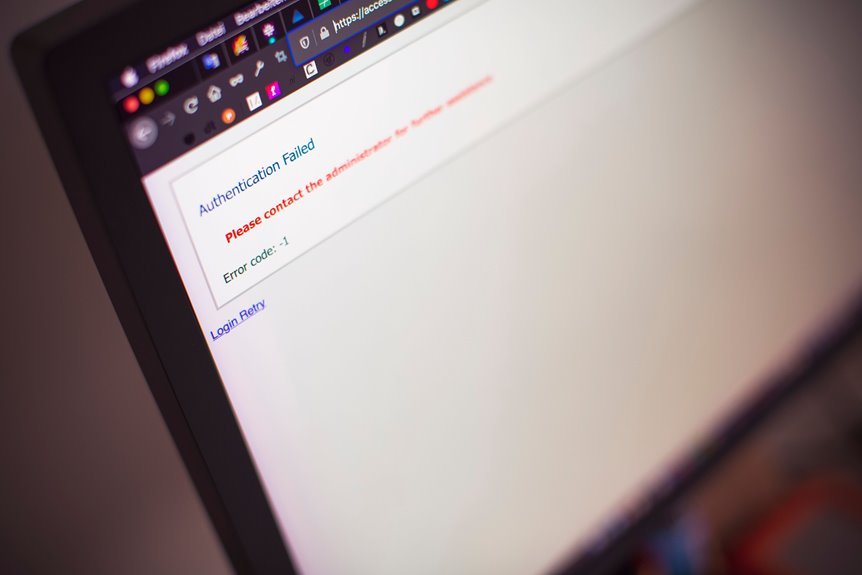
Access to the router’s admin interface begins by connecting a computer or mobile device to the 168.222 private network and entering the device’s default gateway address in a web browser. The login screen appears, prompting credentials. After sign-in, enable login security features, change default credentials, apply strong router terminology, and configure an administrator password, user roles, and session timeouts for enhanced control.
Troubleshooting Tips and Common Misconfigurations
Common misconfigurations and routine troubleshooting steps frequently involve verifying network basics, firmware status, and access controls. When issues persist, practitioners should systematically document outputs, revert recent changes, and isolate segments.
Configuring firewall rules with minimal privilege reduces exposure, while updating firmware ensures device stability. Verify WAN/LAN DNS, MTU, and DHCP scope; apply corrective reboots deliberately.
Final checks confirm restored connectivity and access integrity.
Frequently Asked Questions
Can I Change the 168.222 Router’s Default IP Range?
Yes; the router’s default IP range can be changed via the admin interface. To implement it, system administrators should plan addressing, adjust DHCP scope, update firewall rules if needed, and ensure firmware is current by updating firmware.
Is 168.222 Used by All ISPS for Gateways?
“Every cloud has a silver lining.” No, 168.222 is not universally used; ISPs differ. It is not a universal gateway; unrelated topics and irrelevant discussions can mislead. The address varies, and availability depends on provider, region, and device.
What Security Risks Come With Changing Default Credentials?
Changing default credentials introduces security risks if updates are neglected; unauthorized access may persist. Regular firmware updates mitigate exposures, but inconsistent patching can leave devices vulnerable. Proactive credential management supports safer configurations for users seeking freedom.
How Do I Restore Factory Settings Without Losing Config?
A cautious flicker of indicators begins a restore factory settings while preserving config remains possible through a carefully staged process: backup restore, verify integrity, then apply firmware update, ensuring settings survive and system remains responsive to freedom-driven administration.
Do Parental Controls Work on 168.222 Routers?
Parental controls are available on 168.222 routers, offering configurable content filters and time limits. They remain accessible post-install. Firmware update options may be required to enable or refine these features, ensuring ongoing efficacy and compatibility with policy preferences.
Conclusion
In summary, the 168.222 router address serves as a private gateway within home networks, isolating traffic and centralizing control. Identifying the default gateway, logging in securely, and applying sane defaults are essential steps for robust protection. By hardening credentials, enabling firewall rules, and configuring user roles and timeouts, users create a safer perimeter around connected devices. The consequences of neglect loom like a silent shadow—a warning, not a boast, that vigilance preserves network integrity.